Give each content stream a proof threshold before you remove review gates
Set proof thresholds for each content stream so routine work can run with less review while higher-risk claims keep human judgment.
Writing time is only part of the bill. Learn how to expose review, approval and publishing costs before they consume capacity.

A client’s CFO once asked me what a published article cost them. The content lead had a sensible answer for the writer’s fee and a rough one for design, then the room went quiet: nobody had counted the product expert’s review, the two rounds of factual corrections, the week the piece sat in an approval queue, or the person who added metadata and loaded it into the CMS.
The visible work has an owner and a timesheet. The work around it is scattered across calendars, Slack threads, agency invoices and the goodwill of people whose real job is somewhere else, so a team can speed up drafting and still publish at the same rate because the queue after the draft has not moved.
I would measure cost per published piece and keep elapsed time beside it. Those two figures show whether a change has created capacity or simply made the first stage faster.
Amplience modelled the cost of a banner-and-social kit at $1,136, with $550 for design and copy and $586 for briefing, localisation, checks, approvals and handoffs. Its vendor-produced model covers a retail-style asset rather than a B2B article, yet the split gives shape to a cost many teams feel without seeing. Read the full cost breakdown from Amplience.
Your own workflow determines what an article costs. Map it before you decide where to invest, because the creator’s hours can make up only half the cost of getting an asset safely into the market.
I see teams buy a faster drafting tool, report that first drafts now take less time, and still have no more published work by quarter-end. The savings on the task disappear into the operation: the same unclear brief, the same subject-matter expert who reviews when they have a spare hour, the same legal or leadership queue, and the same manual publishing work at the end.
When budgets are tight, “content feels slow” is not much of a case for investment. Show where paid and internal time goes, where work waits, and which constraint stops the next piece from being published.
Start with one asset your team produces regularly: perhaps a monthly B2B article, a product update, or a campaign landing page. Choose a workflow with enough volume that a better process would matter, then track ten recently published pieces if you have them. Five is enough to begin if the team is small.
For each piece, record these fields in one sheet:

For labour, use each person’s loaded hourly cost where finance can provide it. If that is too difficult for the first pass, use the same internal planning rate for comparable roles and mark the figure as an estimate. Add contractor and software costs that belong specifically to the asset.
cost per published piece = active internal labour + external fees + asset-specific production costs
Then place two dates beside the total: when the work was approved to start and when it was published. The difference is cycle time, where approval delay appears even when it barely shows up in the labour total.
A seven-day wait for executive sign-off might cost only a few minutes of active chasing, yet it prevents the article from supporting a launch, holds up the next task for the same reviewer, and makes the content calendar look fuller than it is. It is a blockage.
In a 2025 survey of 1,015 B2B marketers by Content Marketing Institute and MarketingProfs, 87% of people using AI for content creation reported improved productivity, and 80% reported better operational efficiency. The survey also found that 58% reported improved content quality and 39% improved content performance, while 12% said quality had decreased. Read the full B2B content marketing survey.
Track draft time, but do not use it as your capacity measure. Put correction time, revision rounds, cycle time and the published piece’s intended outcome beside it.
For an article intended to generate qualified interest, that outcome could be a meaningful conversion or a sales conversation. For a customer education piece, it might be completion, reduced support demand or adoption of a feature. Pick the measure before production begins, otherwise a fast workflow produces assets nobody can evaluate.
Content Marketing Institute found that 40% of surveyed B2B marketers struggled to create content that prompts a desired action, 39% named resource constraints, and 33% cited measuring effectiveness. Your worksheet puts those questions in one view: the full cost and elapsed time of a piece show which work deserves more of the team’s limited attention.

Once the sheet has a month or two of data, find the stage with the largest combined burden: high active cost, long waiting time, repeated revisions, or all three.
If subject-matter review takes the longest, give the reviewer a tighter question and a fixed review window rather than sending an open-ended draft. If revisions cluster around positioning, decide the strategic line before research and drafting begin. If publishing is a manual relay between two systems and three people, the workflow needs attention.
I am convinced by Diurna’s approach to content operations because standing streams give the work a cadence, strategy and brand knowledge travel with the piece, editorial memory reduces repeated debates, and named review gates make ownership visible. That gives a team a way to see where a piece is waiting and why.
I do not race every masters swim session because speed comes from the system I can sustain all season. This week, calculate the full cost and cycle time for the last five published pieces in one high-volume workflow; the number will tell you where your next hour of improvement is worth spending.
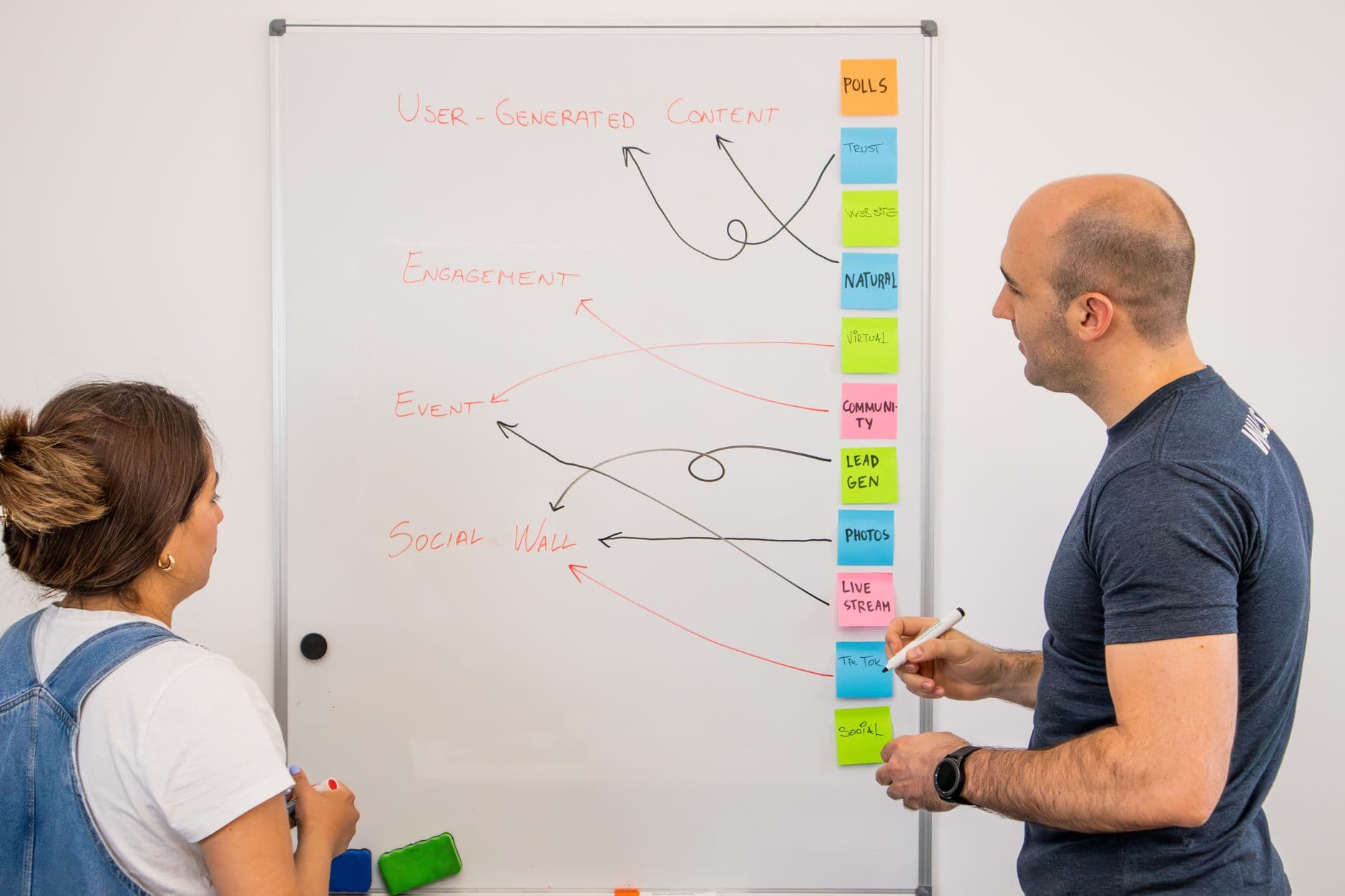

Set proof thresholds for each content stream so routine work can run with less review while higher-risk claims keep human judgment.

Research, brand, factual and publication checks answer different questions—here’s how to assign each gate without slowing every stream.

Point tools produce words; governed content operations keep sources, approvals, exceptions, and ownership attached through publishing.
We onboard a handful of teams at a time. Tell us what you publish and we'll set up a first pipeline together.
Wir verwenden notwendige Cookies, um die Website zu betreiben. Mit Ihrer Einwilligung laden wir zusätzlich Analyse-Werkzeuge, um zu verstehen, was nützlich ist. Sie können Ihre Wahl jederzeit ändern.