Content operations need a governed production layer before publishing
Point tools produce words; governed content operations keep sources, approvals, exceptions, and ownership attached through publishing.
An exception queue helps lean content teams automate routine publishing without losing judgment on claims, sources, or brand language.
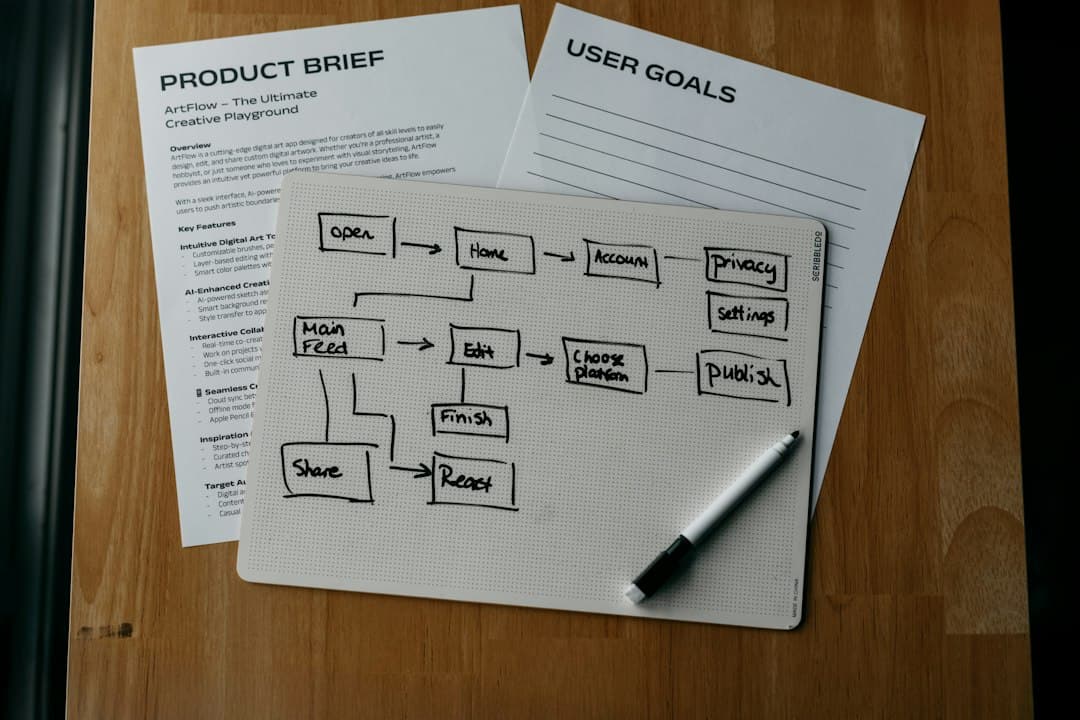
On an agency onboarding, I watched three people edit the same draft in three different tools. One was correcting a claim, one was changing the tone, and one was asking whether the article should publish at all. Nobody was being difficult. They had no agreed place for a draft to leave the normal path.
We moved review to one gate in the run, gave it an owner, and the arguments stopped. Bref, the team still had difficult articles, but routine articles could keep moving.
An exception queue gives unusual work a visible status, a reason, an owner and a way forward when it contains a claim you cannot support, language that does not sound like you, a sensitive subject, or broken workflow data. Before you reduce day-to-day oversight, set that route for the cases that need human judgment.
Publishing automation tends to fail in a familiar way. A team builds one large approval gate because it does not trust every draft equally. Soon, a senior marketer is reading routine articles for missing links, checking metadata by hand and approving copy that already follows the brief. The gate becomes the bottleneck, and people start calling it “quality control” because nobody has time to redesign it.
Define the conditions that require a human decision.
Cloudflare offers a useful pattern from a different setting. As bot submissions increased roughly sevenfold from 2023, it shifted from fully manual review towards automated checks for predictable conditions such as duplicate submissions, particular user-agent patterns and verification methods. Its BotBase history shows each submission as “Waiting for review,” “Accepted,” or “Rejected”.
Use the same operational idea for content. Let a workflow handle checks it can perform reliably, then send ambiguous or consequential work to a named person with the reason attached.
I usually start with five exception types.
A missing or weak source covers a sentence whose evidence cannot be traced to an appropriate source. That might be a statistic without a link, a customer claim with no approved evidence, or a factual assertion drawn from an outdated document. Flag the sentence itself, along with titles, meta descriptions, structured data and image alt text where the evidence needs checking.
An unusual claim is supported in form but outside your normal evidence pattern: a forecast, a striking comparison, a market-wide assertion, or a number that would change a buyer’s view of you. Pause before your stream makes a consequential claim in a voice that sounds certain.
A sensitive topic covers legal, medical, financial, political, reputational or customer-specific material. Your categories will reflect your company. A B2B software firm may rarely touch medical claims, while a company that publishes about payroll or security may need a sharper definition of sensitive language.
Unclear brand language catches work that conflicts with your positioning, terminology or style guide. Perhaps the draft promises a result you would never promise, uses a phrase your sales team avoids, or calls a feature something different from the product team’s approved name. This category stops editors repeatedly fixing the same issue in silence.
Workflow failure covers operational problems: a missing brief, an unassigned author, a stale source pack, publishing metadata that does not match the article, or a piece routed into the wrong stream. These small faults become publishing mistakes when nobody owns them.
Keep the categories short enough that people can choose one quickly. A label for every exception turns the queue into another thing to maintain.
A queue entry should tell a reviewer what stopped, why it stopped and who can clear it before they open the article.
For a draft about customer onboarding that says, “Teams cut onboarding time by 40% with our process,” the workflow cannot find that figure in the approved company sources. It creates an exception for the article and stream, marks the type as “missing or weak source,” and quotes the exact sentence. Its reason says that the figure is unsupported by the current source pack.
The marketing lead or subject expert can supply a reliable source, revise the sentence or remove it. Record the decision and date, with a required resolution such as adding an approved source or deleting the percentage.
That record turns “This feels risky” into “the 40% figure has no approved evidence.” The person resolving it knows what good looks like, and the next editor can see why the choice was made.
Cloudflare says rejected BotBase submissions include “the reason and actionable steps”, rather than leaving the operator at a dead end. Use that discipline in content. “Claim removed because no approved source supports it” gives the next writer a rule they can follow.
Assign the owner by role, then name the person. The content lead can own unclear brand language, while a subject expert owns a technical or customer-specific claim and a legal or compliance contact owns the sensitive subjects your business has identified. Name a backup too. The useful person with the customer examples will eventually be on holiday, in a workshop, or simply deep in another project. I have seen a solid brief stall because the one person who knew which product page was current was away and the positioning document was buried in a shared drive.
Keep the outcome editable. A reviewer may find that the source exists, the brief was wrong, or the exception was raised in error. Cloudflare lets operators update and cancel submissions under review; editorial work needs a way to correct the route without losing its history.
Automate conditions the system can identify reliably when a false pass costs little. Escalate claims that are consequential, difficult to verify or outside the brand’s established language.
That gives you a practical way to set autonomy by stream. A recurring how-to series built from an approved source pack and familiar language might run through drafting, editing and publishing with automated checks for missing links, duplicate topics and required metadata. A new thought-leadership stream about regulation should keep a human review gate for claims and framing, because a confident mistake carries more weight.
A missing alt-text field is easy to detect and has limited impact. An unverified claim about a customer’s results carries more risk, and a workflow may struggle to judge the evidence. Set different gates for those conditions.
In Diurna, choose the autonomy level that fits each stream. Routine production can run end to end when your rules are established, while exception cases stay visible in the workflow for the person with authority to resolve them. As the stream proves itself and your source pack, terminology and checks improve, you can remove routine review where it no longer earns its place.
An exception queue should change the workflow behind it. Without that review, it is a tidier inbox.

Once a week, spend 20 minutes looking at the queue by exception type and looking for repeat causes. If six articles were stopped because the same product name was used incorrectly, add the approved name to the brief and source pack. If missing sources cluster around a particular topic, improve the research inputs or keep that topic human-reviewed. When the same metadata error returns, turn it into an automated check.
Keep novel, high-impact cases with a human reviewer. A quiet queue can mean your rules are clear, or that people have learned to publish around it, so read a few accepted articles alongside the exceptions when you first reduce oversight.
Before you increase publishing automation, use this warm-up:
Routine content can then move at a proper pace, while articles that need judgment arrive with the right person, the right context and a clear decision to make.

Point tools produce words; governed content operations keep sources, approvals, exceptions, and ownership attached through publishing.

A lean, practical path from an empty workspace to a publishable article, using trusted sources and clear human review gates.

Google’s AI search guidance points to a durable test: publish original evidence, keep SEO foundations sound, and measure whether readers make useful decisions.
We onboard a handful of teams at a time. Tell us what you publish and we'll set up a first pipeline together.
We use essential cookies to run the site. With your consent, we also load analytics to understand what's useful. You can change your mind anytime.